For many organisations, Linux still means web servers or DevOps teams. The same foundation can also carry operational maintenance (MCO) of the whole estate: desktops, virtualisation, identity, collaboration, monitoring.
What Linux changes in practice
Licence cost. Fewer forced renewals tied to a single vendor. Savings also show up in hardware: a fleet not pushed off support by aggressive OS requirements lasts longer.
Control. An open source system can be documented, audited and transferred. You reduce dependence on a provider who “knows the machine” while nobody else can rebuild it.
Operational security. Less exposure to mass campaigns aimed at a dominant desktop, provided you apply good practice (updates, hardening, monitoring). Linux is not magic: it is leverage when operations are serious.
Servers, desktops, virtualisation
On servers, Linux is already mainstream in many estates. The logical next step is aligning desktops and open source hypervisors (KVM, QEMU) to limit tool and skill silos.
For declarative, reproducible infrastructure, NixOS goes further: configuration lives in versioned files. We cover this on NixOS at HeBeKo and in Understanding NixOS.
MCO: what HeBeKo takes on
Useful Linux MCO is not only “answering tickets”. It means:
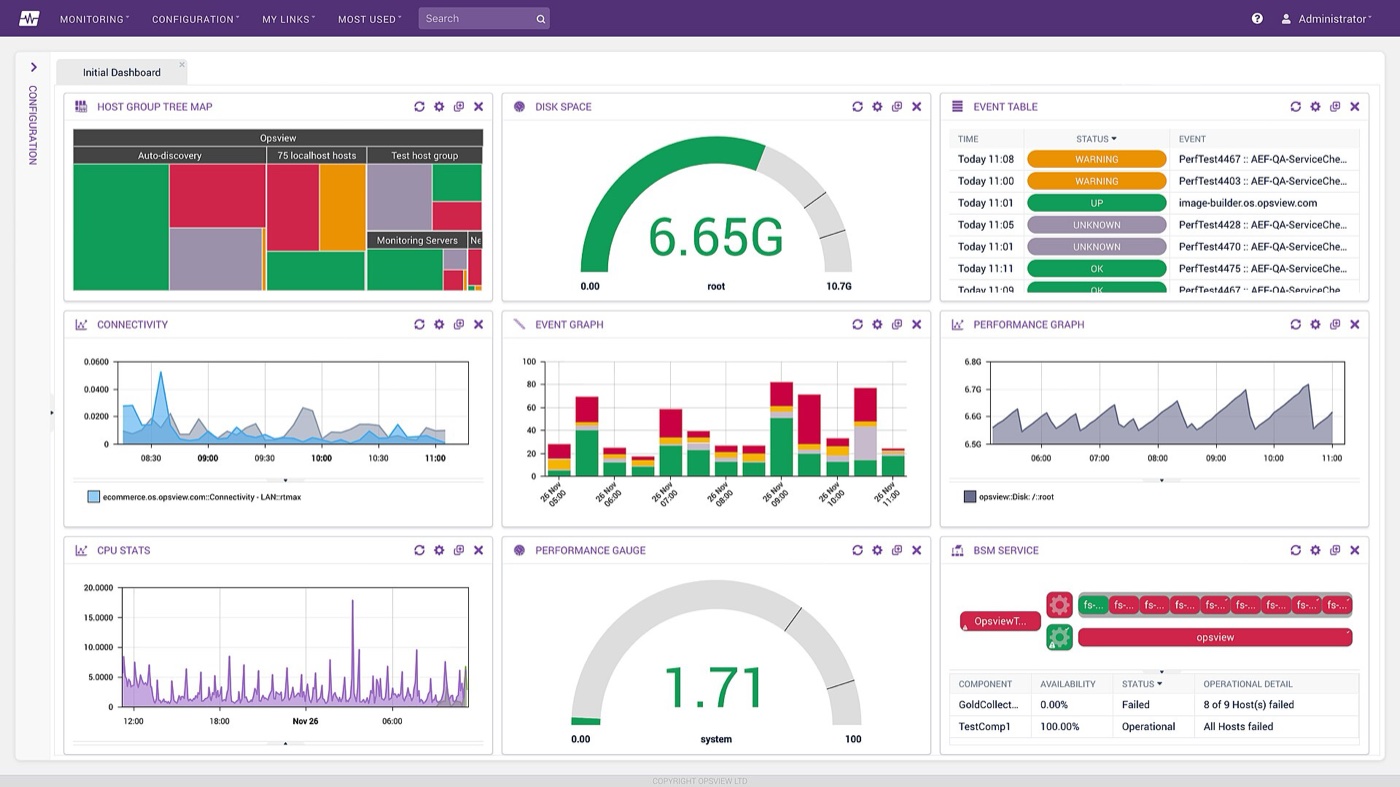
- actionable monitoring and alerts;
- planned updates without surprise breakage;
- tested backups;
- living documentation of the real state of the estate.
Depending on maturity, we start with an audit, deployment / migration, then MCO or full managed services.
Sovereignty and proof on the ground
Authorities are already migrating to Linux without an in-house IT department. See La Croix-en-Touraine. The State is experimenting with Sécurix and Bureautix on NixOS (about 250 workstations at DINUM): a strong signal, but these building blocks are not yet ready for generalised deployment elsewhere. The question is no longer “is Linux serious at the office?”, but at what pace for your context.
To frame a roadmap, also read digital sovereignty or contact us.